Acrylic Hardcourt: Hard Acrylic Sports Court Surfacing
A multi-coat acrylic sports surfacing system applied over concrete or asphalt. It gives a hard, even surface with a consistent bounce and good slip resistance, stands up to sun and rain, and is easy to maintain. Suited to tennis, basketball, pickleball and outdoor multi-sport courts.
What is Acrylic Hardcourt?
Acrylic Hardcourt is a sports surfacing system made of water-based acrylic coatings applied in several layers over a concrete or asphalt base, with no shock-absorbing rubber layer underneath. The result is a firm court surface that is even from end to end, with a fine sand texture that helps prevent slipping.
Because the surface is equally hard and smooth everywhere, the ball bounces consistently and predictably, which suits sports that rely on the bounce, such as tennis, basketball and pickleball. Sports-grade acrylic coatings also stand up to UV and rain, so they suit outdoor courts in Thailand's hot, humid climate, and they come in a wide range of colors.
Compared with the Acrylic Cushion Rubber system, which has rubber layers beneath the color coats, Hardcourt uses fewer layers, gives a harder surface and needs a smaller budget. That is why it is popular for school, community and village courts and for practice courts that need durability and simple upkeep. For courts in heavy, continuous use that need a more resilient surface, consider the PU Hardcourt Sport Coating
What are the benefits of Acrylic Hardcourt?
Compared with bare concrete or uncoated asphalt, an Acrylic Hardcourt system makes a court better to play on, safer and easier to maintain in several ways.
Consistent bounce
The surface is hard and even across the whole court, so the ball bounces at a predictable angle and height and players can control the pace of the game precisely, in tennis, basketball and pickleball alike.
Stands up to sun and rain, well suited to outdoor courts
Sports-grade acrylic coatings resist UV and moisture and hold their color well. When the base has the correct slope, rainwater runs off quickly and the court is soon back in use.
Slip-resistant surface with good grip
Fine sand in the resurfacer and color coats creates a texture that reduces slipping, so players can start, stop and change direction with more confidence, and the texture can be adjusted to suit each sport.
Easy to maintain and good long-term value
Routine care is mainly sweeping and washing with water. When the color starts to fade with use, the top coats can be recoated and the lines repainted without removing the existing surface, as long as the base is still in good condition.
Acrylic Hardcourt system build-up, layer by layer
An Acrylic Hardcourt system is built from several layers applied in sequence, each with its own job. The total coating thickness is roughly 1.5–2 mm, depending on the number of coats and the condition of the existing base:
Base preparation — concrete or asphalt
The base must be sound, fully dry and sloped for drainage. Cracks are repaired, holes filled and areas where water ponds are leveled first. New concrete must cure fully before the coating system goes on, and where moisture rising from below is high, a moisture barrier may be added before painting starts.
Acrylic primer / sealer — the base coat
Penetrates the surface to seal the pores of the concrete or asphalt and improves adhesion for the next acrylic layer, reducing the risk of blistering and delamination over time.
Acrylic resurfacer — sand-filled leveling coat
Applied coat by coat with a squeegee to fill pores and minor irregularities, giving an even court surface and a base texture before the color coats. The number of coats depends on the condition of the existing surface.
Acrylic color coating — two sand-filled color coats
Two coats of acrylic color mixed with fine sand provide both the color and the slip-resistant texture. The amount of sand in these coats sets the roughness and speed of the court. Many colors are available, such as green, blue, brick red and gray, and the playing area and surrounds can be in different colors.
Line marking
Lines are painted with acrylic paint made specifically for court lines and laid out to the court dimensions and line positions set by each sport's rules, such as tennis, basketball and pickleball, with crisp, clearly visible edges.
Surface texture — choosing court speed for the sport and use
The texture of an Acrylic Hardcourt surface is set by the amount and grain size of the sand mixed into the resurfacer and color coats. The rougher the surface, the higher the friction: the ball slows down and shoes grip better, while a finer surface makes the ball travel faster. Choose by sport and player group as follows:
Fine texture (fast)
Less sand with a fine grain. The ball travels fast with lower friction. Suits players who like a fast game and tennis courts that favor serving and hard hitting.
Medium texture
A moderate amount of sand. Balanced bounce and good shoe grip. Suits general tennis and basketball courts, school courts and club courts.
Coarse texture (slow)
More sand with a coarser grain. The ball slows down and grip is high. Suits pickleball courts, beginners and courts used by players of all ages.
Indoors or outdoors: outdoor courts are where this system shines, because it handles sun and rain well. It can also be used indoors, but the moisture in the concrete slab should always be checked first. For indoor courts used for many hours a day, or where players want to protect their knees, a system with rubber layers such as Acrylic Cushion Rubber, or a PU system, will feel softer.
Tip: a court shared by several sports should use a medium texture that suits every sport actually played on it. The DMH Groups team can advise on the right surface texture for your use and budget.
Courts that suit the Acrylic Hardcourt system
Tennis courts
A hard, even surface gives tennis balls a consistent bounce, and court speed can be tuned through the surface texture. Suits courts at schools, clubs, housing estates and private homes, with lines marked to ITF tennis court dimensions for both singles and doubles.
Basketball courts
Supports dribbling, which needs a consistent bounce, while the slip-resistant surface helps players stop and change direction securely. It stands up to outdoor use at schools and in communities, and lines can be marked for a full court or a half court. For more cushioning for the knees, choose the Acrylic Cushion Rubber system instead.
Pickleball courts
A coarse Acrylic Hardcourt texture gives the plastic ball a consistent bounce and gives shoes good grip. DMH Groups has installed pickleball courts with this system at many sites in Bangkok, Nonthaburi, Chonburi and Songkhla, and several projects added a moisture barrier for areas with high moisture.
Multi-sport courts and outdoor futsal
Sports areas at schools, universities or in communities that host several sports in one space can be zoned with different floor colors and clearly marked with overlapping lines for each sport. The hard surface handles outdoor futsal, basketball and volleyball, making good use of both space and budget.
Acrylic Hardcourt compared with other sports surfacing systems
DMH Groups installs several sports surfacing systems, each with its own strengths. The summary below gives an overview of the differences to help with an initial decision:
Acrylic Hardcourt
Hard, dense surface with little shock absorption but a consistent bounce, and ball speed can be tuned through the texture. Suits general outdoor courts, schools, communities and pickleball courts, and can also be used indoors. Maintain by sweeping and washing, and recoat the top layers when the color fades.
Acrylic Cushion Rubber
Adds rubber layers beneath the color coats, so the surface is softer and absorbs moderate to high impact depending on the number of rubber layers. Suits courts played on regularly where players want to protect their joints. Can be used indoors and outdoors, with upkeep similar to the Hardcourt system.
PU Hardcourt
Uses polyurethane, giving a surface that is tougher and more flexible than acrylic, with moderate shock absorption and medium to fast ball speed. Suits courts in heavy continuous use and competition courts. Can be used indoors and outdoors, is easy to clean, and the topcoat can be renewed when the surface wears.
PU Sport Rubber
Adds synthetic rubber to a PU system for a soft, highly elastic surface with high shock absorption and a slower ball. Suits running tracks, fitness areas, gyms and spaces that need cushioning. Can be used indoors and outdoors, and the seamless surface is easy to clean.
In short: if you want a durable outdoor court that is easy to maintain and keeps the budget under control, Acrylic Hardcourt fits the brief. If you need more shock absorption, consider a system with rubber layers, and for courts in heavy continuous use, consider a PU system.
More details on each system: Acrylic Cushion Rubber · PU Hardcourt Sport Coating · PU Sport Rubber
Acrylic Hardcourt installation steps
How long a court lasts depends on preparing the base properly and applying each layer in the right order. DMH Groups works in this sequence:
- Site survey and assessmentWe inspect the existing concrete or asphalt on site, measure slopes and ponding areas, and check moisture, cracks and the strength of the base to decide on repairs and the right number of coats.
- Surface preparation and repairThe surface is ground and cleaned to remove stains, algae and dust, cracks are repaired, ponding areas are leveled, and a moisture barrier is added where the slab moisture is high.
- Apply the acrylic primer / sealerThe primer is applied over the whole area and left to dry according to the weather before the next layer. This layer helps the acrylic system bond firmly to the base.
- Apply the acrylic resurfacerThe sand-filled resurfacer is squeegeed on in the specified number of coats, checking flatness and ponding between coats so the court surface is even before the color goes on.
- Apply two acrylic color coatsTwo coats of court color mixed with fine sand are applied in the chosen color and texture, working in dry weather with no rain so the paint dries evenly.
- Line marking and handover inspectionLines are marked to the court dimensions of the sports to be played, and the color coats and lines are checked before handover, along with advice on court care.
Caring for an Acrylic Hardcourt surface
Acrylic Hardcourt is not difficult to maintain, and regular care keeps the color and surface in good condition for longer:
Do
• Sweep dust, leaves and loose sand off the court regularly • Wash with clean water or a mild cleaner • Drain standing water after rain • Check for cracks periodically and repair them while they are small • Recoat the top layers when the color starts to fade or the surface becomes smooth • Repaint the lines when they start to fade
Avoid
• Cleaning with acids or corrosive chemicals • Driving cars or heavy vehicles onto the court • Dragging chairs, tables or metal equipment across the surface • Leaving heavy objects in the same spot for long periods • Wearing shoes with metal studs on the court • Letting tree roots or weeds push up the court edges without fixing them
Read more about caring for each type of court surface in our article Sports court maintenance
Why choose DMH Groups for Acrylic Hardcourt sports surfacing?
More than 20 years of experience
At least 200 completed projects for schools, universities, government agencies and private clients
Quality materials following international guidelines
We use acrylic coatings made specifically for sports courts that resist sun and hold their color well, and we apply every layer the system calls for.
End-to-end service, from survey to handover
Free site survey, system and color recommendations, quotation, installation and line marking through to handover.
Projects nationwide across Thailand
DMH Groups crews work in every region, from Bangkok and its surrounding provinces out to the provinces, with projects in places such as Hat Yai, Kamphaeng Phet and Nakhon Phanom.
After-sales care and workmanship warranty
We warrant the quality of our installation work, provide inspection and repair after handover, and advise on court maintenance.
See the material specifications used in this system: Acrylic Sports Court Topcoat
Frequently asked questions
How is Acrylic Hardcourt different from Acrylic Cushion Rubber?
What bases can Acrylic Hardcourt be installed on?
Can Acrylic Hardcourt be applied to newly poured concrete straight away?
How long does installation take?
How do I maintain an Acrylic Hardcourt surface?
How is the price of an Acrylic Hardcourt court worked out?
Selected projects
Some of the Acrylic Hardcourt courts installed by the DMH Groups team
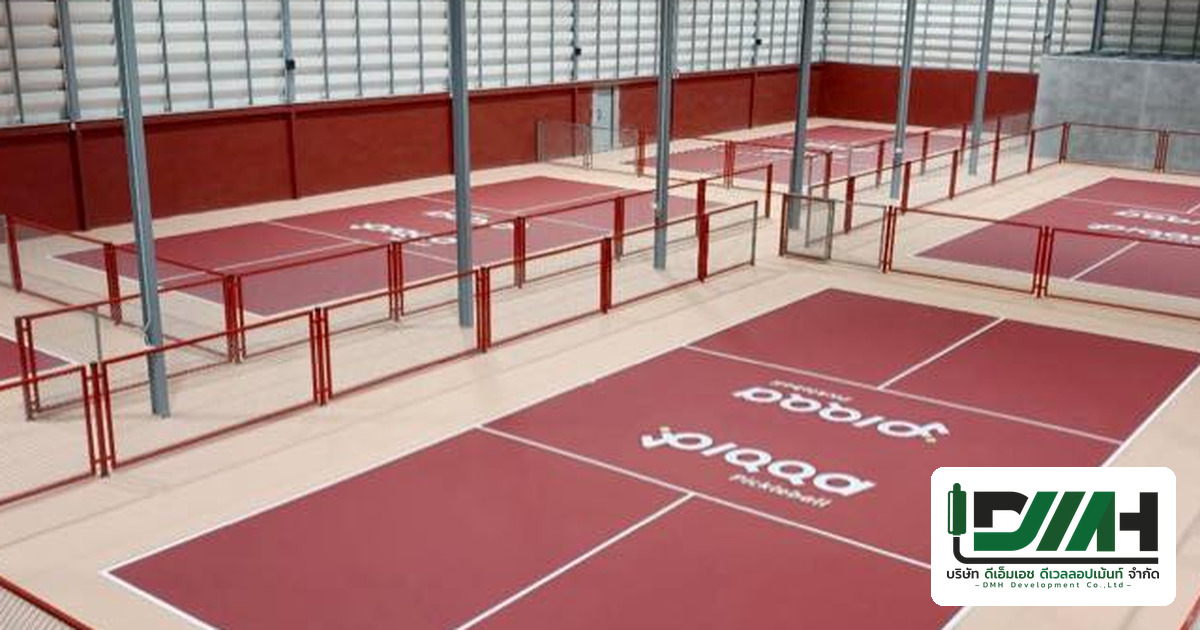
Acrylic Hardcourt pickleball court + moisture barrier, PIQQA, Hat Yai, Songkhla
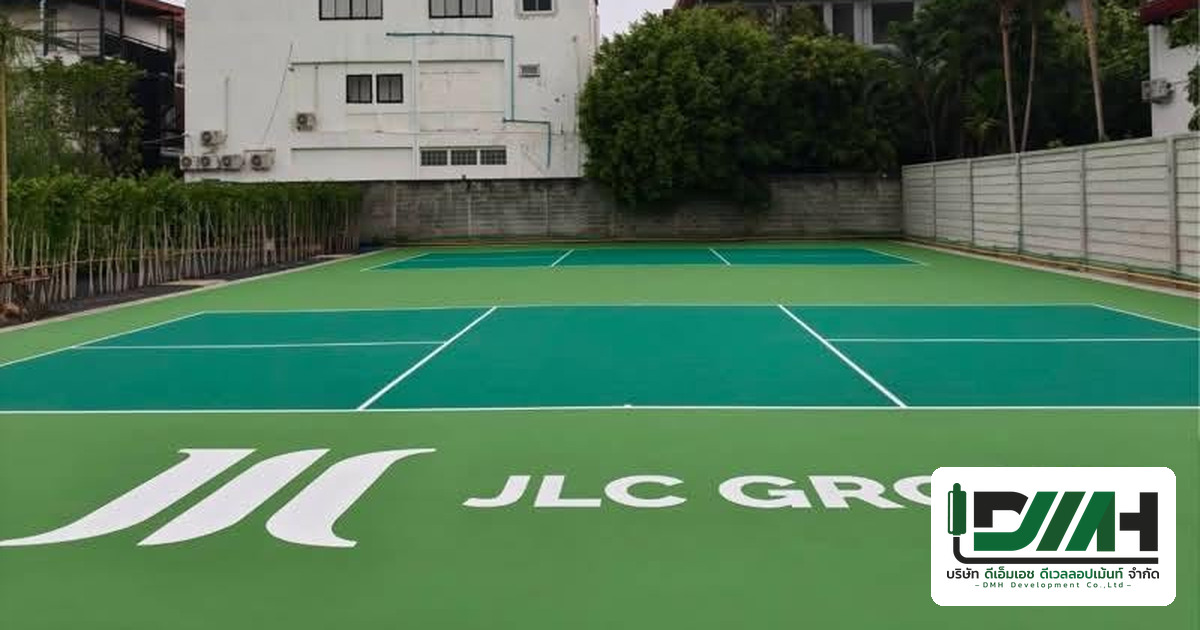
Acrylic Hardcourt pickleball court, Jula’s Herb, Lat Phrao, Bangkok

Sports court renovation with Acrylic Hardcourt, Satri Witthaya School, Bangkok

Acrylic Hardcourt multi-sport court, Kamphaeng Phet Rajabhat University
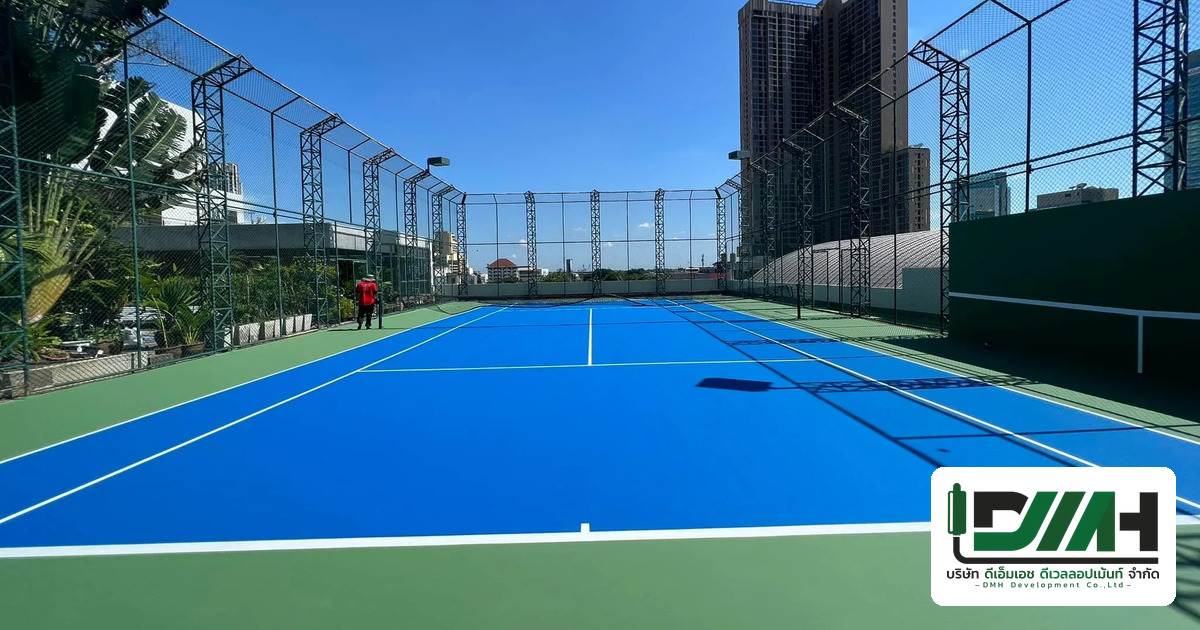
Acrylic Sport Hardcourt tennis court, Sukhumvit 36, Bangkok
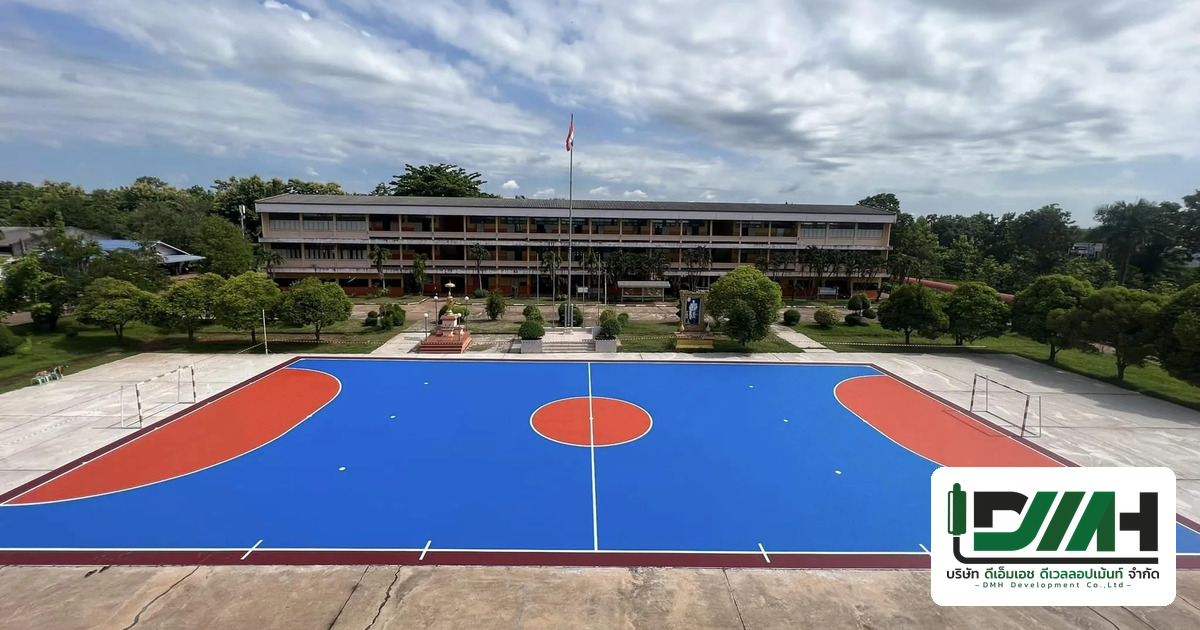
Acrylic Sport Hardcourt tennis court, Plapak Witthaya School, Nakhon Phanom
Related articles
What Is Acrylic Sports-Court Coating? Pros, Cons and Types
Which Sports Suit Acrylic Coating + How to Choose the Right Formula
Tennis court paint: how to coat a court to ITF specifications
Basketball court paint: how to coat a court to the right specification
Indoor vs outdoor sports court paint: the differences
5 types of sports court paint and how to choose the right one
Interested in an Acrylic Hardcourt sports court?
Free on-site survey and quote nationwide — by the professional team at DMH Groups