
Epoxy flooring doesn't come in just one type. Thicknesses range from 0.1 to 5 mm, and each type suits a different kind of area. This page sums up which system your factory, warehouse, cleanroom or server room should use.
How many types of epoxy flooring are there, and how do they differ?
They differ in installation method and coating thickness, which determine durability and price (for the factors that affect price, see Epoxy flooring price per square meter)
Epoxy Coating (roller-applied)
0.1–0.5 mm thick · Budget-friendly
Rolled directly onto the floor at 0.1–0.3 mm per coat, with coats repeated until the required thickness is reached. Suited to warehouses, parking areas, walkways and general factory floors that need a clean, easy-to-clean surface on a controlled budget.
Epoxy Self-Leveling (poured and spread)
1–5 mm thick · Smooth, high-gloss finish
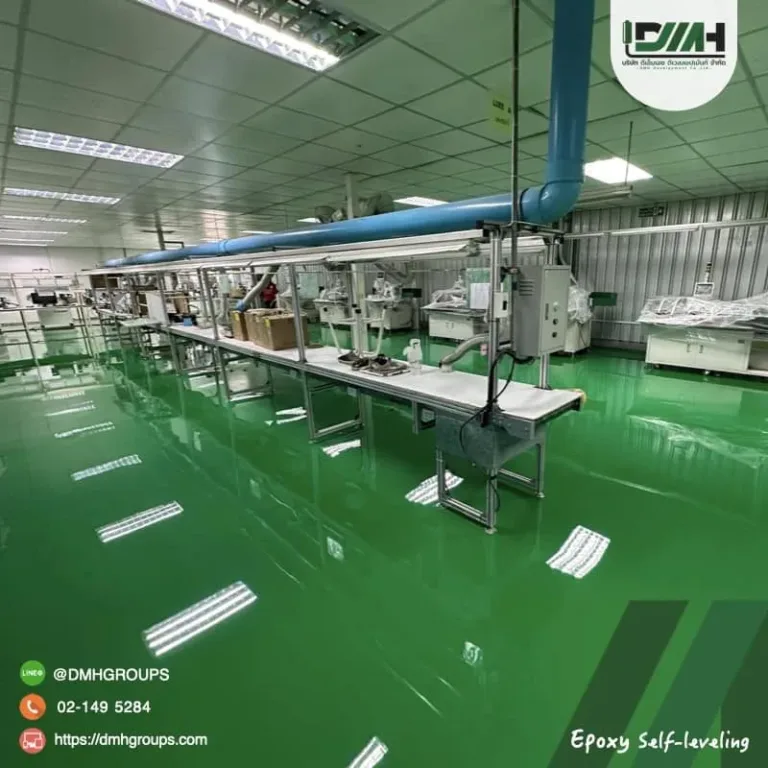
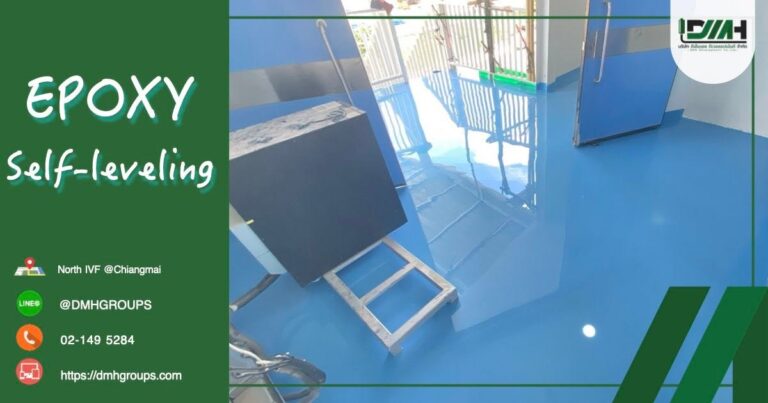
Poured and spread so it flows and levels itself, giving a very smooth, high-gloss and highly durable surface that resists industrial chemicals, acids and alkalis, oil and impact. Suited to areas with high cleanliness and hygiene requirements, such as food and pharmaceutical plants that must meet GMP/HACCP requirements.
Epoxy Anti-Static (ESD)
Dissipates static charge to ground
Anti-static epoxy flooring that carries electrical charge to ground to help protect electronic equipment from damage. Suited to electronics factories, server rooms and production lines that handle static-sensitive components.
Which epoxy system suits which area?
If you are not sure which type your floor falls into, our crew will survey the site free of charge and recommend the system that fits.
Warehouses · Parking areas · Factory walkways
Where the priority is a clean, easy-to-clean surface on a controlled budget, roller-applied Epoxy Coating is enough.
Food factories · Pharmaceutical plants · Cleanrooms
For a seamless, highly hygienic surface suited to GMP/HACCP facilities, use Epoxy Self-Leveling at 1–5 mm.
Electronics factories · Server rooms
Static-sensitive components call for Epoxy Anti-Static (ESD) flooring, which carries charge to ground.
Floors exposed to heat, frequent washing or outdoor conditions
Epoxy is not the answer in every case. Floors like these should use a PU or PU Concrete system instead. For details, see PU flooring services
How the DMH team installs epoxy flooring
The one step that cannot be skipped is surface preparation, because it decides how many years the floor will last.
1. Site survey and floor inspection
We check moisture, the strength of the existing floor, cracks and how the floor is actually used before proposing a system and thickness.
2. Surface preparation by grinding
The floor is ground to open up the surface so it is clean and porous enough for the coating to bond. Old, peeling paint must be ground off completely.
3. Crack repair and leveling
Cracks and chips are filled and low spots leveled before the actual system goes down.
4. Primer application
The primer is the layer that bonds the epoxy to the concrete. Skipping this step is the main reason floors peel prematurely.
5. Epoxy system application at the agreed thickness
Rolled on in several coats, or poured and spread with the air bubbles rolled out, then left to cure for the specified time before the area goes back into use.
Epoxy floors installed by DMH's own team
On every job, the floor is ground and primed first.

Real epoxy floor projects from DMH's portfolio. Click a card to see the photos and details of each project.


Questions clients often ask before ordering an epoxy floor
If you can't find the answer you need, just message our team.
How thick should an epoxy floor be?
Which system should a food factory use?
How chemical resistant is an epoxy floor?
There is existing paint or old epoxy on the floor. Can it be coated over?
Can epoxy flooring be used outdoors?
How is the price worked out, and is there a charge for the site survey?
Not sure which epoxy system your factory needs?
Let the DMH Groups team survey your site, measure the actual area and prepare a quotation, free of charge, nationwide.
Need a flexible floor? See our PU flooring service for cold rooms, food plants and sports courts.